
Pl@ntNet is a free citizen science app that identifies plants from photos using image-based AI, contributing observations to global biodiversity research.
About
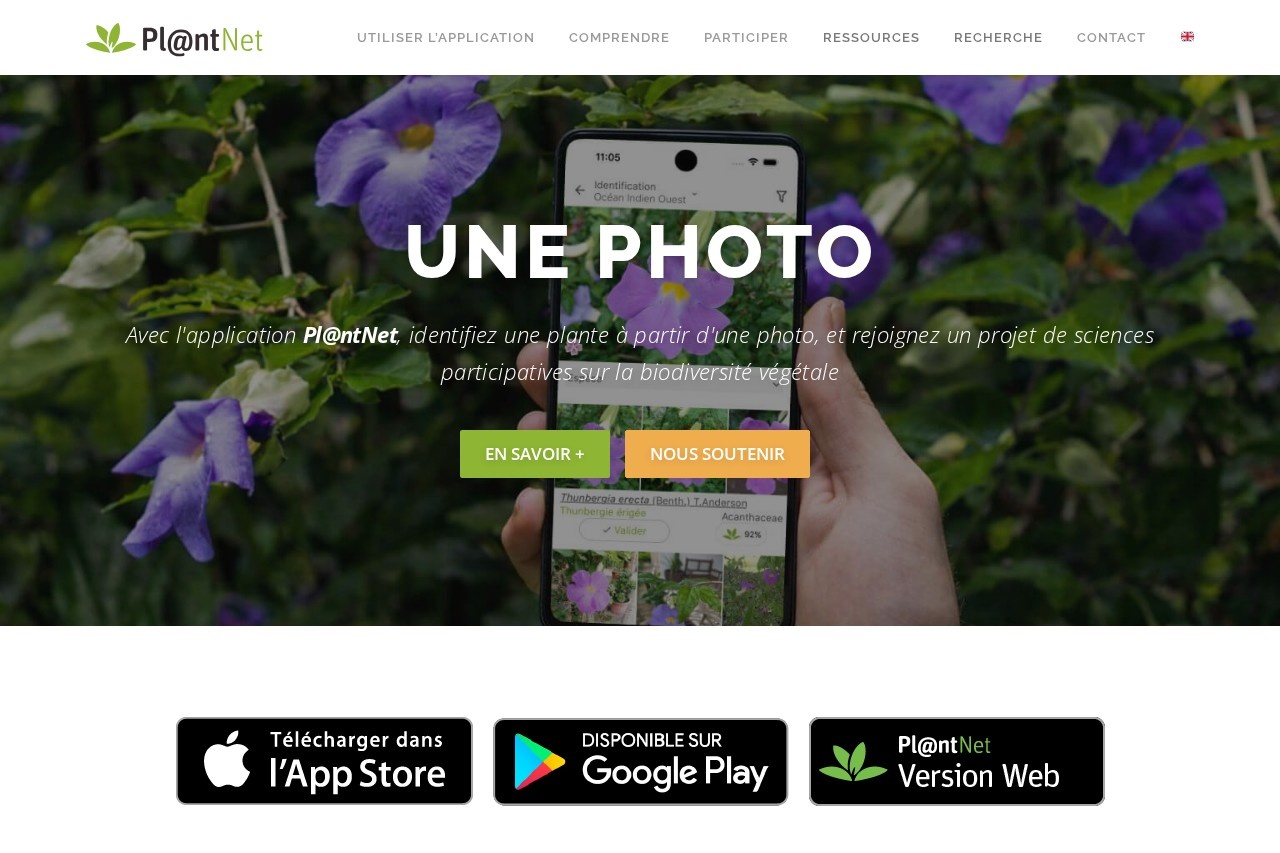
Pl@ntNet is a citizen science application that identifies a plant from a single photograph and turns each user's observations into data for biodiversity research. It addresses two problems at once: the difficulty non-experts face when trying to name an unfamiliar plant, and the constant need in ecology for large, geographically broad observation datasets.
The app works by comparing a submitted picture against a large reference collection — the project's site cites tens of thousands of species and well over a billion images across 77 regional and thematic floras — and returning the most likely matches. Users can review matches collaboratively, work in groups, and submit observations that feed open data channels such as GBIF. Pl@ntNet is a trademark jointly owned by the French research organizations CIRAD, INRAE, INRIA and IRD, and it is developed by a consortium of those public research institutes. Beyond the app itself, the project maintains an API for developers, open datasets such as Pl@ntNet 300k and GeoPlant, and an active research program on automated plant identification.
Key Features
Pricing & Fees
- Pricing: Not publicly listed on the pages we reviewed; check the official site for current plans.
- Free and open access: The project runs donation campaigns explicitly to keep Pl@ntNet "open and free to everyone."
- Scale: The site reports 84,710 species, over 1.47 billion images, and 77 floras in its system.
- Multiple ways to participate: Options include creating an account, submitting plants, collaborative review, translating, donating, and proposing micro-projects.
Who It's For
Pl@ntNet suits anyone who encounters an unknown plant and wants a quick, informed identification: gardeners noticing a declining shrub, hikers and foragers naming wild species along a trail, and students or teachers using it for botany coursework. Agricultural professionals can apply the Diseases & Pests feature to diagnose crop threats. Researchers and developers benefit from the open datasets, API, and GBIF-linked observation data, while conservation organizations can partner with the project on biodiversity monitoring initiatives.
FAQ
What is Pl@ntNet?Pl@ntNet is a free citizen science app, developed by a consortium including CIRAD, INRAE, INRIA and IRD, that identifies plants from photographs and feeds shared observations into biodiversity research.
Is Pl@ntNet free to use?Yes, the project describes itself as committed to keeping the platform open and free for everyone, funded partly through donations and micro-project sponsorship.
What platforms and integrations does Pl@ntNet offer?Pl@ntNet is available as a mobile identification app and through the plantnet.org website, and it offers a developer API, open datasets (Pl@ntNet 300k, GeoPlant), and data published via GBIF.
Can Pl@ntNet identify plant diseases?Yes, its "Diseases & Pests" feature is designed to help identify threats affecting plants and crops when a plant starts to decline.
Does Pl@ntNet have any limitations?Identification depends on photo quality and on coverage of the relevant regional flora, so results are suggested matches that users and the community can review rather than guaranteed identifications.
Related Tutorials
View all →
Related Tools
View all → AI OCR Extract text from images and convert to editable Word documents with AI-powered OCR.
 Leonardo.Ai Leonardo.Ai is an AI image generation platform that helps designers, marketers, and artists create production-ready visual assets with consistent style control.
 AI Tools Directory Find the best AI tools and resources to boost your productivity and creativity.
 Roboflow Roboflow is an end-to-end computer vision platform that lets teams annotate images, train models, and deploy vision AI in the cloud or at the edge.