
Argil is an AI video production studio for teams and agents that connects multiple AI models, keeps brand and cast on record, and turns briefs into finished videos.
About
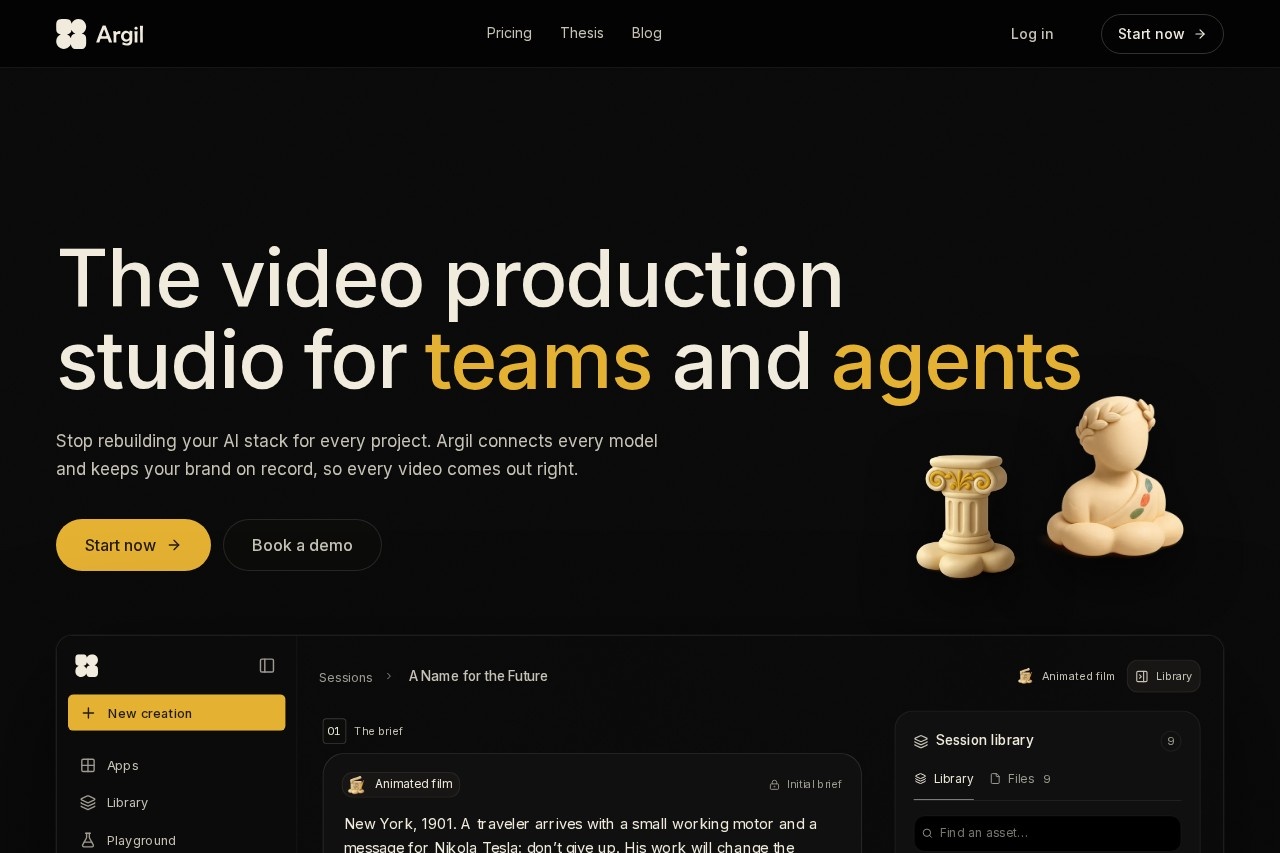
Argil is a video production studio built for teams and AI agents. Instead of assembling a new stack of AI tools for every project, users work inside one system where the cast, sets, and visual style of a production are stored and reused, so every video stays consistent with the brand.
The product connects multiple AI models for image and video generation and coordinates them through a structured workflow: a brief is shaped, a script is broken into shots, a storyboard is drawn, and the film is shot and edited. An AI "director" agent handles these steps, picking models and executing each shot. Users can work directly in the Argil app, and the company indicates that external agents such as Grok, Claude, and ChatGPT will be able to drive the system as well. Pricing follows a subscription model with monthly plans.
Key Features
Pricing & Fees
- Pricing: Three plans are listed: Pro from $50 per month, Studio at $1,250 per month (done with you), and Enterprise from $2,500 per month. Talk-to-sales and demo options are available.
- Credits system: Generation consumes credits whose amount depends on the model and content type; monthly plan credits refresh and do not roll over, while pay-as-you-go credits bought in the workspace do not expire.
- Cancellation and billing: Subscriptions can be cancelled from workspace billing settings, with access continuing until the end of the billing period; yearly billing charges the year upfront while keeping a monthly credit allowance.
Who It's For
Argil is aimed at video production teams, creative studios, and brand teams that need to produce videos repeatedly without losing visual consistency. It suits content marketers producing episodic series, studios making animated films or mascot content, and organizations building agent-driven content pipelines where AI systems, rather than people, initiate and carry out video production from a stored brand system.
FAQ
What is Argil?Argil is an AI video production studio for teams and agents that connects multiple AI models and keeps brand assets like cast, sets, and style on record so every video comes out consistent.
How much does Argil cost?The Pro plan starts at $50 per month, the Studio plan costs $1,250 per month, and Enterprise starts at $2,500 per month, according to the pricing page.
Do unused credits roll over on Argil plans?Monthly plan credits refresh each month and do not stack, but pay-as-you-go credits purchased in the workspace do not expire.
Which AI models and agents does Argil work with?Argil connects models such as Seedance for video and Nano Banana for image generation, and its roadmap includes letting external agents like Grok, Claude, and ChatGPT drive productions.
Can Argil be cancelled at any time?Yes, subscriptions can be cancelled from the workspace billing settings, and access continues until the end of the current billing period.
Related Tutorials
View all →

Related Tools
View all → AI Studios AI Studios is DeepBrain AI's all-in-one platform for generating avatar-led videos from text, with 2,000+ AI avatars, 150+ languages of dubbing and text-to-speech, and interactive conversational agents.
 Pictory - Best AI Video Generator Pictory enables effortless creation and editing of professional videos from text, requiring no technical skills or downloads.
 Wan 2.5 AI Video Generator Instantly create 1080P cinematic videos from text or images with native audio sync in just 3 minutes.
 Seedance 2.0 - AI Video Generator Seedance 2.0: The ultimate AI video generator. Turn any text into realistic cinematic videos in seconds.
 Free Grok Video Generator - AI Video Creation | No Sign Up Required Grok video generator creates stunning videos from text and images. Fast AI video creation with natural language control. 2 free credits daily, no credit card needed. Try Grok Video now!