
Transform ephemeral AI conversations into a permanent, searchable archive. Visualize development timelines, track decisions across commits, and collaborate with your team.
About
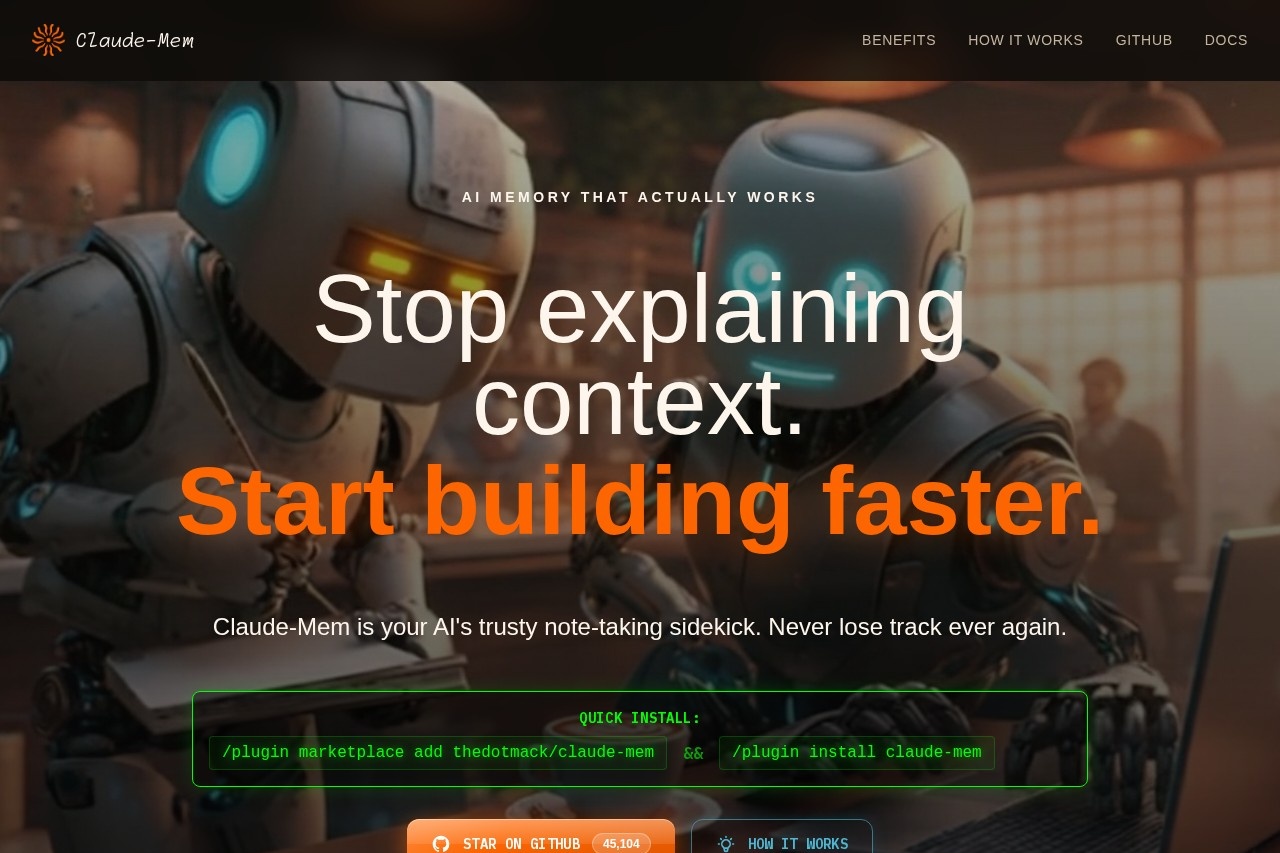
Claude-Mem is an intelligent conversation archiving and analysis tool built for modern development teams and knowledge workers. As AI conversations increasingly become central to creativity, decision-making, and problem-solving, we help you turn those fleeting AI exchanges into a permanent, searchable knowledge asset for your team.
Key Features
Pricing & Fees
- Pricing: The claude-mem engine is free and open source. Paid CMEM Pro plans start at $30/month, with Heavy at $70/month and CMEM Max at $100/month, each including a larger usage allowance.
- Free tier: The open-source engine runs locally at no cost, providing automatic capture in supported integrations plus searchable local memory and session history.
- Free trial: CMEM Pro offers a 30-day free trial; included usage and automatic upgrade terms are shown at checkout.
- Usage limits: Each paid tier includes an observation usage allowance; automatic upgrades can move a subscription up when the allowance is used, and CMEM Max usage above its allowance is billed as overage subject to a safety ceiling.
- Teams: TeamBrain shared memory is in development with pilot teams; seats, scope, and price are agreed on a fit call, with no public pricing announced.
Who It's For
Software development teams tracking technical decision-making and managing AI-assisted code reviews and architecture discussions. Product managers and designers archiving the full chain of thinking behind requirement generation, feature brainstorming, and UX optimization. Research and academic teams documenting Q&A sessions, literature analysis approaches, and experimental design discussions. And any individual or team relying on AI collaboration who wants to systematically accumulate knowledge from AI interactions and boost long-term productivity.
Related Tutorials
View all →
Related Tools
View all → AI Tool - AI-Powered Solutions This AI tool provides intelligent solutions to streamline workflows, enhance productivity, and deliver accurate results across various tasks.
 Dograh - Voice Assistant Workflow Builder Open Source Voice Assistant Workflow Builder.
 OfoxAI One API for all LLMs. Access OpenAI, Claude, Gemini & 100+ models through a unified endpoint. OpenAI SDK compatible.
 Claude Claude is an AI assistant made by Anthropic that answers questions, writes and edits text, analyzes documents, and helps with coding through natural conversation.
 ChatWise - AI Chat Assistant Chat with ChatGPT, DeepSeek, Claude, Gemini, Llama, and other top AI models in one place.