Model Context Protocol
Model Context Protocol (MCP) is an open standard that standardizes how applications provide context to AI models, enabling seamless integration and interoperability.
Introduction
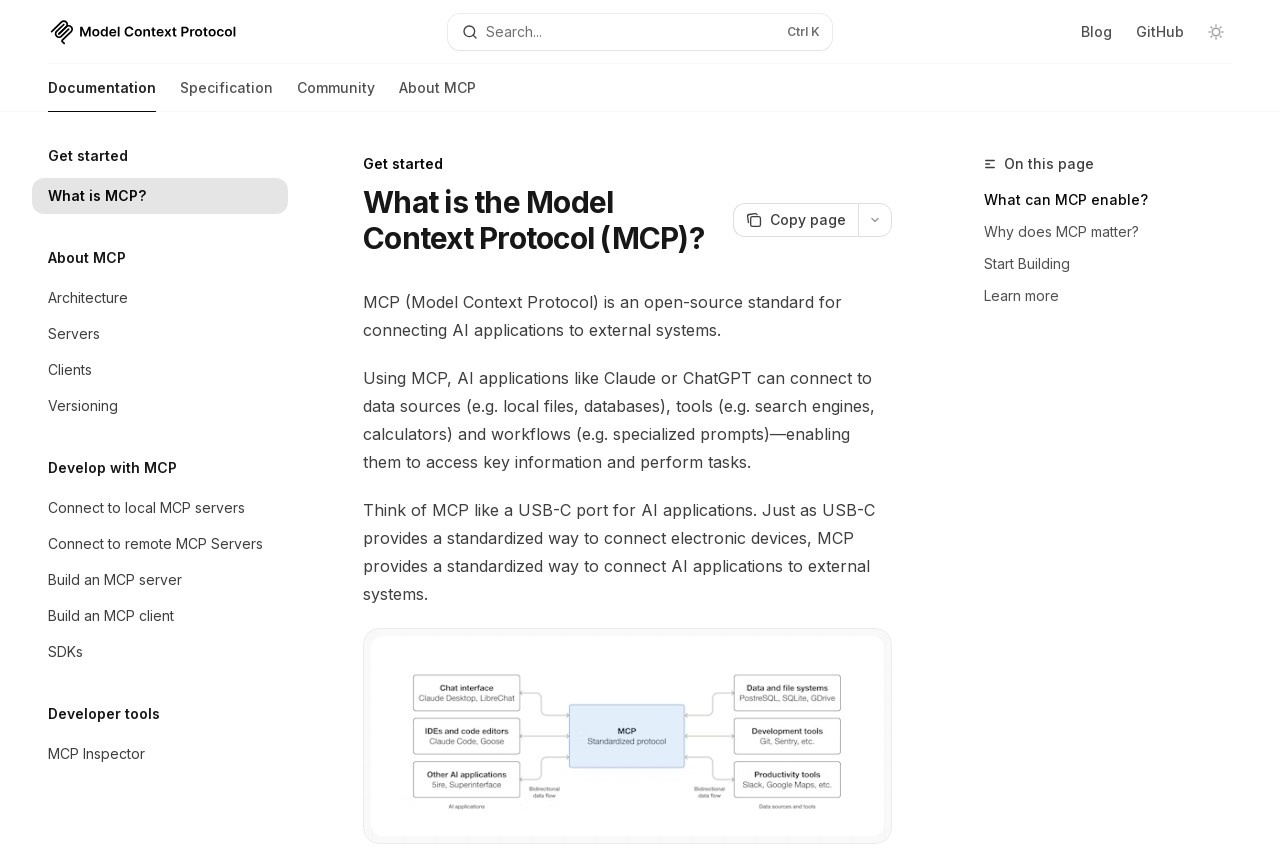
Model Context Protocol (MCP) is a standardized communication framework designed to simplify the integration of artificial intelligence models with external data sources and tools. It provides developers and enterprises with an efficient, unified way to enable AI to securely and reliably access real-time information and a wide range of capabilities, significantly enhancing the practicality and intelligence of AI-powered systems.
Key Features
- Standardized Connectivity: Offers a unified interface specification that enables seamless integration between AI models and various data sources such as databases, APIs, and file systems.
- Dynamic Context Access: Allows models to retrieve external information on demand, ensuring generated outputs are based on the most current and relevant data.
- Tool Invocation Support: Integrates external tools such as calculators, search engines, and custom software to extend the model's operational and execution capabilities.
- Secure Communication: Employs permission controls and encryption mechanisms to safeguard data transmission and access processes.
Highlights
- Exceptional flexibility and scalability, making it adaptable to a wide range of use cases.
- Reduces integration complexity while supporting cross-platform and cross-environment deployment, from cloud-based to on-premises scenarios.
- Built on an open standard that encourages community contributions and ecosystem growth, continuously pushing the boundaries of AI application innovation.
Who It's For
This protocol is ideally suited for AI researchers, enterprise development teams, and technology decision-makers. Whether you are building intelligent assistants, data analytics platforms, or automated workflows, MCP helps users quickly achieve deep integration between AI and existing systems, enhancing product competitiveness and user experience.