
Etched has developed a specialized ASIC for Transformer models, offering 8x performance over NVIDIA Blackwell. The A0 chip delivers 10x efficiency.
About
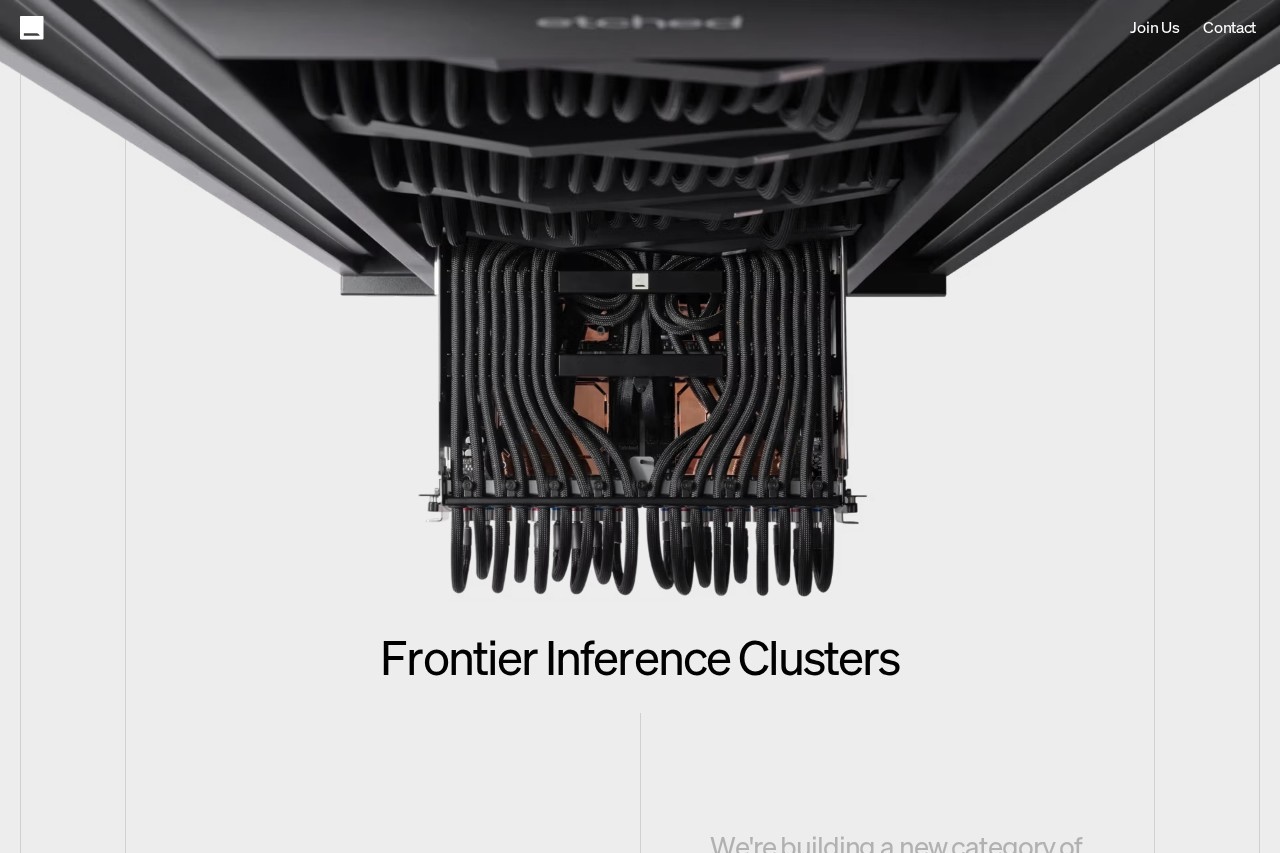
Etched is an AI chip startup headquartered in Cupertino, California, founded in 2022 by Harvard dropouts Gavin Uberti and Chris Zhu. The company focuses on building Frontier Inference Clusters, with its core product being Sohu, an ASIC chip purpose-built for the Transformer architecture. Etched claims Sohu is an order of magnitude faster than NVIDIA's upcoming Blackwell GPU while also being more cost-effective. The team at Etched numbers over 400 people, with talent drawn from top semiconductor companies including NVIDIA, Google TPU, Broadcom, SK Hynix, and TSMC. The company has raised a total of $800 million across four undisclosed funding rounds plus strategic investments, reaching a valuation of $5 billion. Its A0 chip has already come back from TSMC's N4P process node, and the first rack-scale products have secured over $1 billion in customer contracts, with shipments expected this summer.
Key Features
Pricing & Fees
- Pricing: Not publicly listed on the pages we reviewed; check the official site for current plans.
- Demand & orders: Etched reports over $1B in customer orders and is validating its first rack-scale product with customers.
- Funding: The company has raised $700M at a $21B valuation led by Jane Street, part of $800M raised across four financings.
- Product focus: Sohu is a Transformer-only inference chip; A0 silicon has taped out on TSMC's N4P process.
- Team & operations: A 400+ person engineering team with backgrounds at NVIDIA, Google TPU, Broadcom, SK Hynix, and TSMC, with infrastructure in Taiwan and San Jose.
Who It's For
Etched is built for organizations running large-scale Transformer inference workloads, including cloud service providers looking to lower total cost of ownership by replacing portions of their GPU clusters, and AI teams serving models like Llama or GPT that need maximum throughput at minimum cost. It is also well suited for long-context and agent-based applications that demand high throughput while maintaining low interactive latency, making it a compelling option for any operation where Transformer inference performance and cost efficiency are the top priorities.
