Kiro: Agentic AI Development
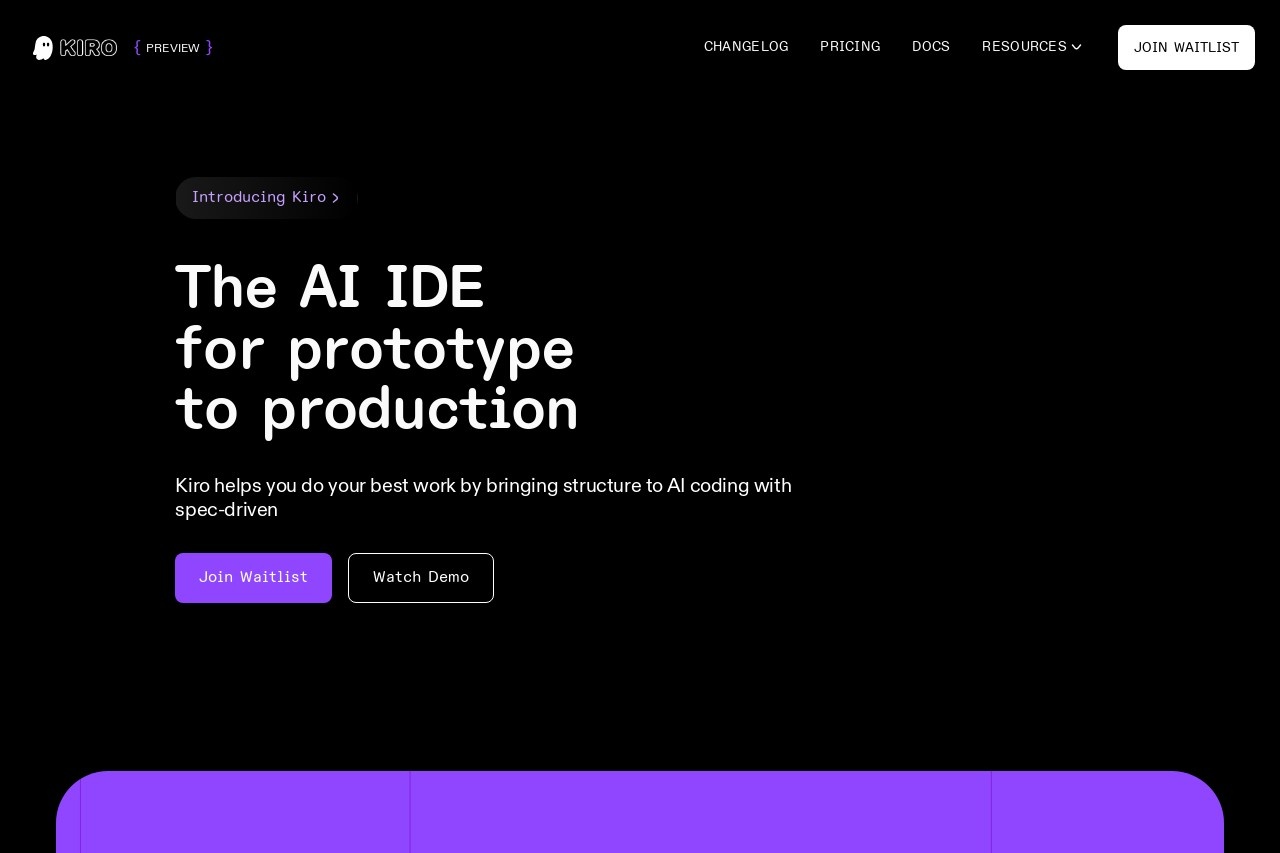
Kiro enables agentic AI development from prototype to production, with an IDE that streamlines the entire workflow.
Introduction
Kiro is a revolutionary intelligent integrated development environment (IDE) built around the modern concept of Specification-Driven Development. It is designed to help developers and teams move ideas seamlessly and efficiently from the initial prototype stage all the way to production deployment, significantly raising the level of discipline and automation in software development.
Key Features
- Spec as Code: Converts development specifications such as APIs and data models into executable, verifiable code, ensuring consistency between design and implementation.
- Intelligent Code Generation: Automatically generates high-quality business logic code, test cases, and API documentation based on established specifications, reducing repetitive work.
- Real-Time Consistency Checks: Validates code against specifications during the coding process, instantly detecting and correcting any deviations.
- Integrated Deployment Pipeline: Includes a built-in automated toolchain covering code review, testing, build, and deployment for one-click, secure releases.
Highlights
- The core strength of Kiro lies in its intelligence and specification-driven approach; it is not just a code editor but a true project collaborator.
- By placing specifications at the center of the development workflow, Kiro effectively resolves common pain points such as high communication costs, documentation drifting from code, and difficult late-stage integration.
- Its highly automated capabilities allow developers to focus on core business innovation rather than tedious low-level implementation, significantly boosting development efficiency and software quality.
Who It's For
Kiro is ideal for software development teams that value discipline and standardization, startups and project groups that need to iterate quickly and move from prototype to product, full-stack developers and backend engineers looking to reduce repetitive coding and improve code quality, and organizations implementing microservice architectures that require strict management of API contracts and interface consistency.