
MLX-powered audio models for Apple Silicon — TTS, STT, STS, and VAD
About
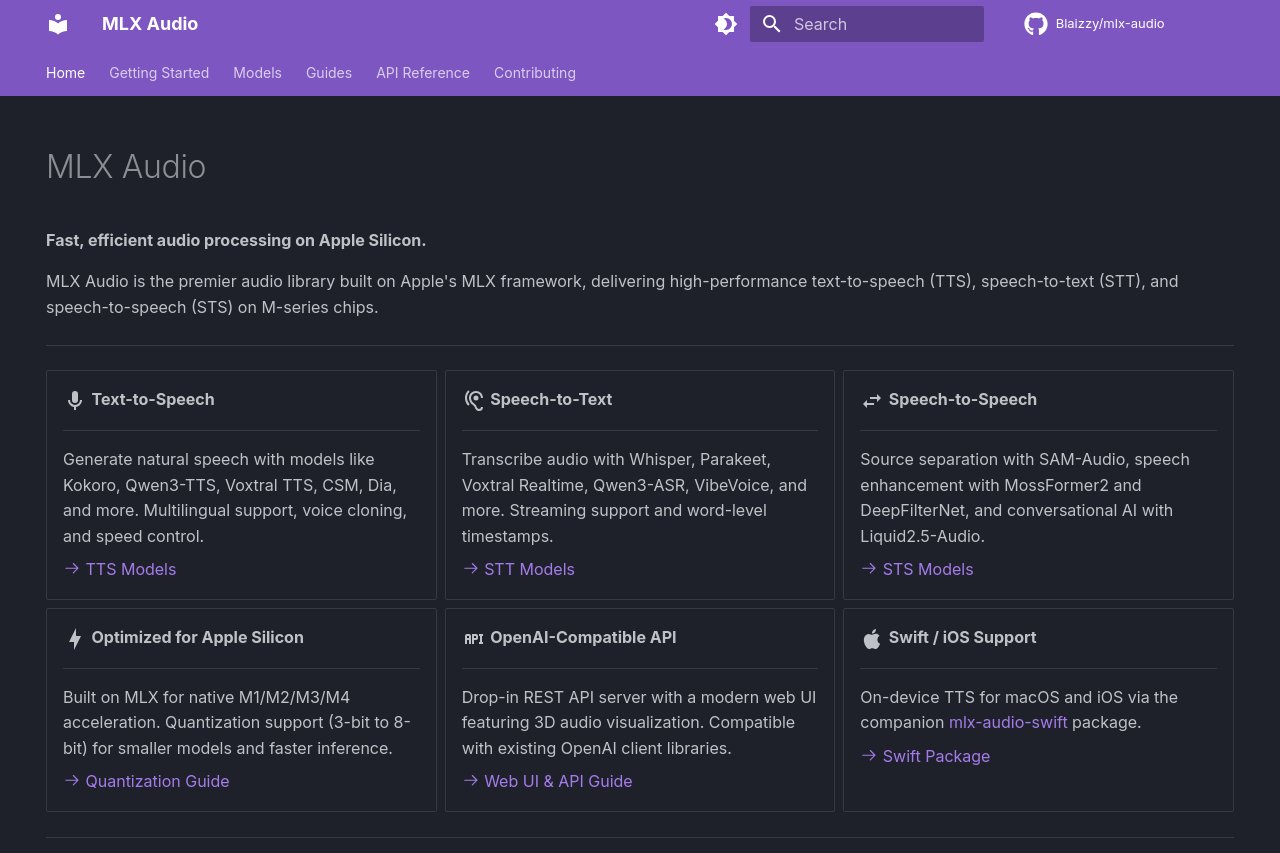
MLX is a suite of audio models built on the MLX framework, specifically optimized for Apple Silicon. It offers core capabilities including text-to-speech (TTS), speech-to-text (STT), speech-to-speech (STS), and voice activity detection (VAD). By leveraging the Neural Engine and high-performance computing of Apple Silicon, MLX enables running advanced audio AI models efficiently and smoothly on Mac.
Key Features
Pricing & Fees
- Pricing: Not publicly listed on the pages we reviewed; check the official site for current plans.
- Open Source and Free: The project is fully open-source, so users can use, modify, and contribute code at no cost.
- Installation: Available via pip, uv, or development setup, with CLI and Python quick-start options.
- API Availability: Ships an OpenAI-compatible REST API server with a web UI, usable with existing OpenAI client libraries.
Who It's For
MLX is ideal for macOS developers, AI researchers, audio processing enthusiasts, and enterprise users who need efficient audio processing. Whether you are building voice assistants, implementing real-time transcription, or experimenting with speech synthesis, MLX provides robust support.
Related Tutorials
View all →

Related Tools
View all → Stable Audio Stable Audio is an AI-powered tool for generating high-quality audio content.
 ebook2audiobook Generate audiobooks from e-books with voice cloning and support for 1158+ languages!
 SimpleClean SimpleClean is a browser-based AI tool that removes background noise and wind noise from audio and video files, built for podcasters, video creators, and educators.
 MiniMax AI Video Generator MiniMax is an AI video generator that produces high-quality videos from text prompts, streamlining video creation.
 oMLX - LLM Inference Optimized for Mac A native macOS inference server on MLX with paged SSD KV caching, reducing TTFT to under 5s. OpenAI & Anthropic compatible.